Laparoscopic box trainer · 3D-printed kit
Practice laparoscopy at your desk. Your phone is the camera.
LapLab is a box trainer you put together in minutes. Lay your phone on the plate, stream it to your laptop with LapLink, and work the instruments while you watch the screen, the way it feels in the OR.
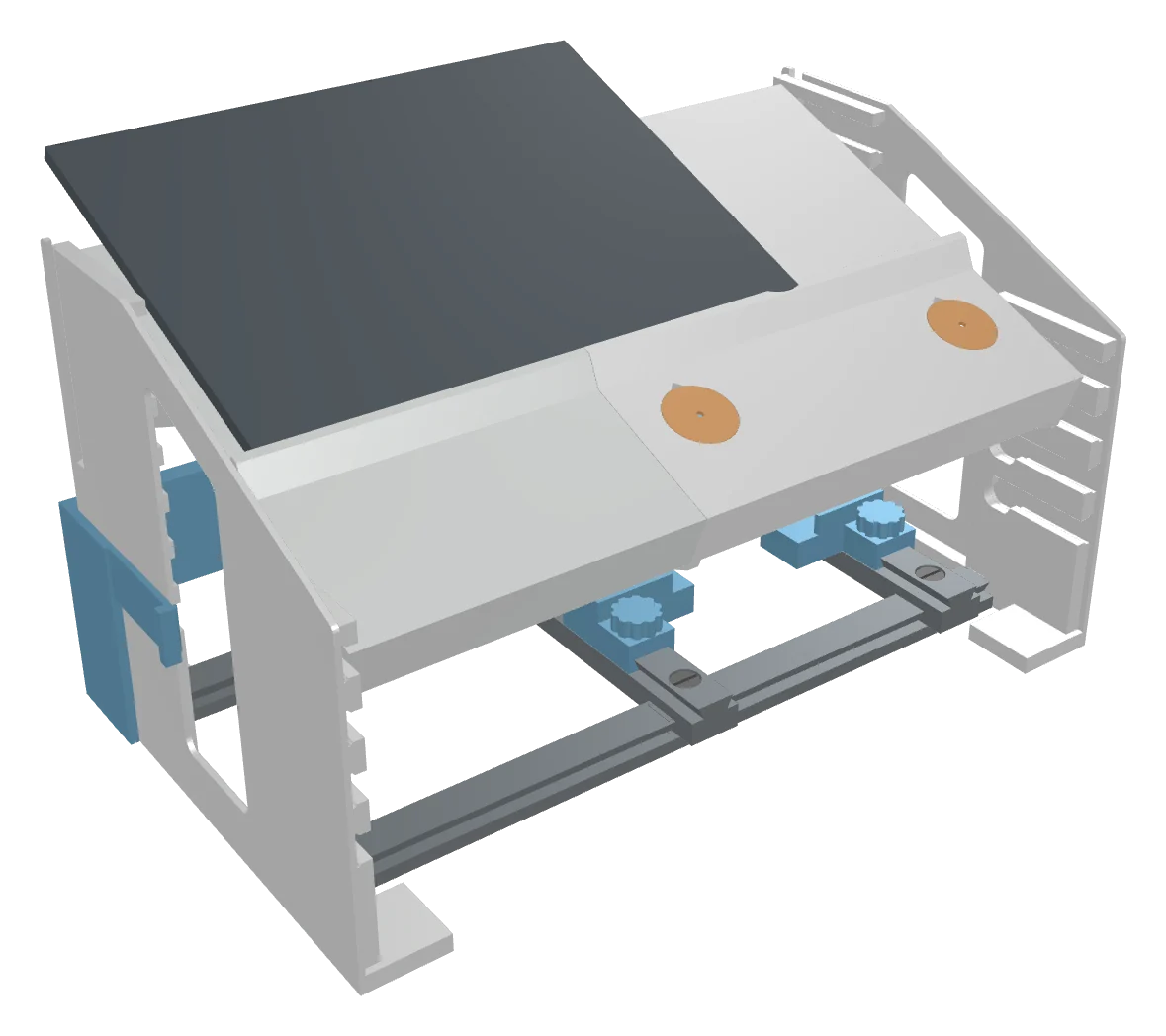 Phone or iPad → camera window
2 ports · 5 mm TPU seals
Sliding rack positions the task
Phone or iPad → camera window
2 ports · 5 mm TPU seals
Sliding rack positions the task
How it works
Set up in three steps, no camera to buy.
Put the box together
Lower the side stands onto the rack rails, then slide the plate in. Its pins drop into the hooks at the front and rest on a shelf at the back. The rear brace clips on and tightens with one knob.
Lay your phone on the plate
Place the phone over the camera window, lens down, against the ledge. An iPad works the same way. It looks straight down at the task.
Watch it on your laptop
Open LapLink to stream the phone's camera to your computer, or use a video call. Put the laptop behind the box and train looking up at the screen.
Adjustable
Change the angle, change the reach.
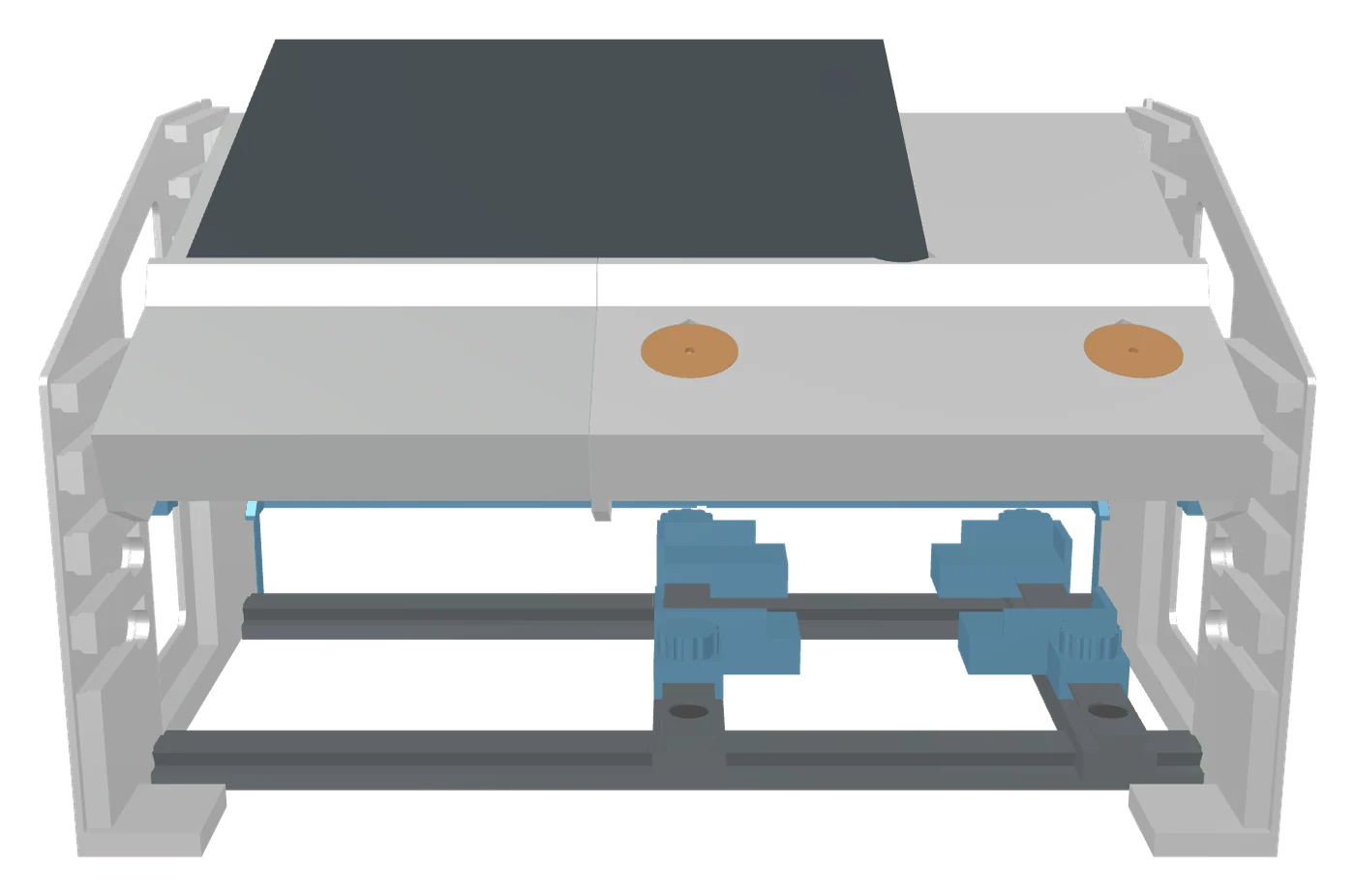
Each stand has four hooks at the front and seven shelves at the back. Pick a pair and the plate locks at that angle with a J-shaped catch. Low and flat for long reaches, steep for working close to the camera.
Underneath, two bars slide left and right on the rails and four corner holders slide front to back, so you can put the task anywhere under the camera and lock it with thumbscrews.
Add-ons
More stations, sold separately.
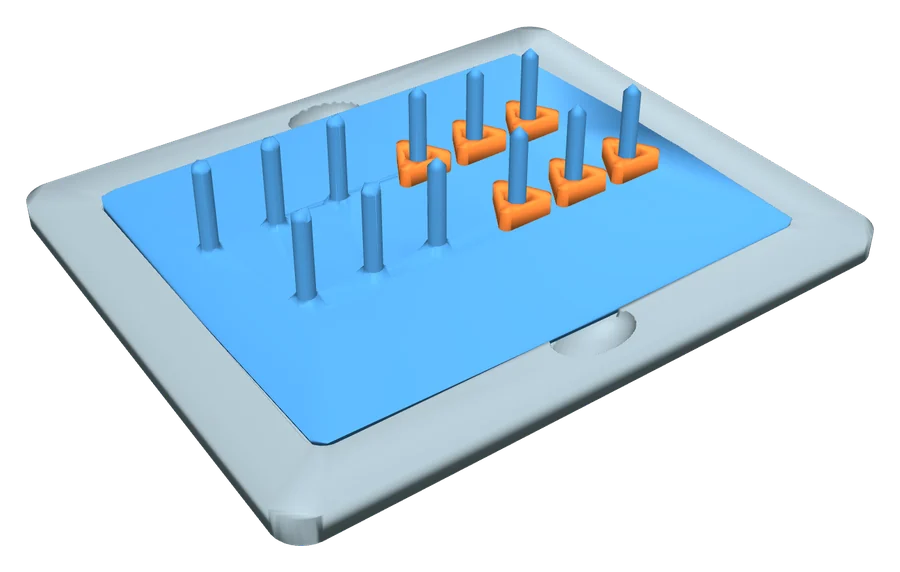
Each module drops into the task base in place of the peg board. Add any of them to your order.
Not in the box
What you bring.
Instruments
Laparoscopic graspers, scissors and a needle driver, 5 mm shafts. Training-grade sets around 30 cm (12") long work well.
A phone and a laptop
Any phone or iPad with a camera to lay on the plate, and a computer to watch it on with LapLink or a video call.
Practice supplies
Gauze squares, suture, a silicone suture pad and a bit of foam, depending on which stations you use.
Order
Each kit is printed to order.
Ordering is a short form. Pick the kit and any add-ons and tell us where to send it. We'll email you to confirm the total and payment before anything is printed.
- Fill in the order form with your kit, add-ons and shipping address.
- We reply by email with the total and how to pay.
- Your parts are printed, checked against each other and packed with assembly instructions.
- It ships to you. Lead time is on the form.
Questions
FAQ
Do I have to assemble it?
Yes, but it takes minutes and no tools. The stands lower onto the rails, the plate slides into the hooks, and everything else drops in or tightens by hand. Printed instructions come in the box.
Which instruments fit?
The ports take standard 5 mm laparoscopic instruments through soft TPU seals. Training instruments around 30 cm (12") long reach the task at every plate setting.
What camera does it use?
Your own phone or iPad, lying on the plate over the camera window. Stream it to a laptop with LapLink, or join a video call from both devices.
What can I practice?
The kit includes peg transfer. Add-ons cover precision cutting, ligating loops, needle handling, suturing and knot tying on a pad, and hand-tied knots. These follow the classic box-trainer skill tasks used in surgical training.
What is it made of?
The frame and modules are printed in PLA. The port seals, peg rings, foot pads and pin caps are printed in flexible TPU.
Is this a medical device?
No. It's a practice trainer for building skills, not for use on patients.